
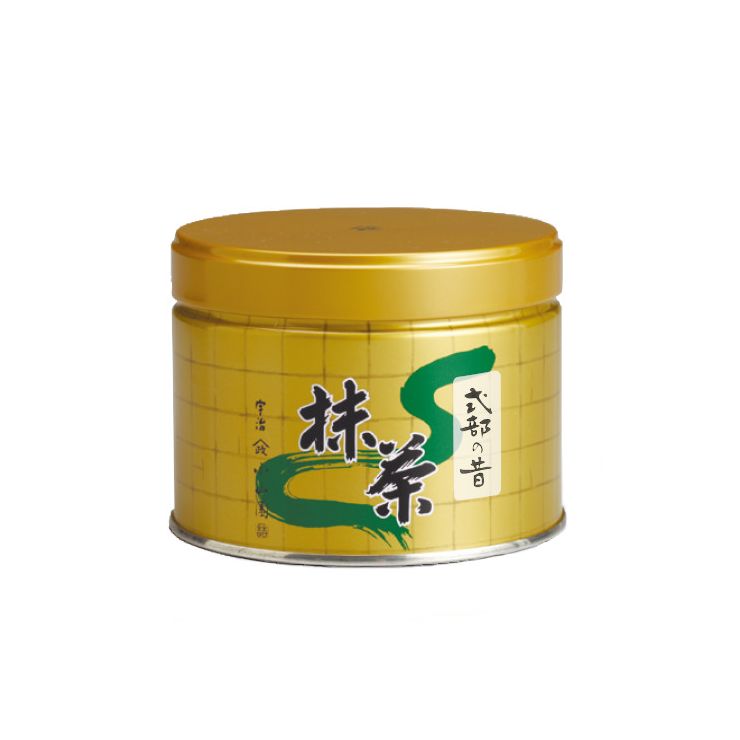
Matcha - Shikibu no Mukashi (Yamamasa Koyamaen, Uji) 150g
Shikibu No Mukashi is Yamamasa Koyamaen's premium matcha tea. The Mukashi at the end of the name refers to the past. Matcha tea producers usually use this term for slightly higher-quality teas. Shikibu refers to Murasaki Shikibu. Murasaki Shikibu (c. 973 – c. 1014) was a writer, poet and court lady in Heian-era Japan. Shikibu no Mukashi is located right in the middle of the producer's matcha range. We think this grade is like a gateway to the producer's premium matcha grades, with many of the same characteristics as the producer's more expensive matcha grades. It is best suited for making usucha, or thin tea. All matcha is frozen in our warehouse, so you can be sure that the freshness is top-notch! Here, this premium matcha is available in a mega-sized 150g jar.
Details
General
Yamamasa Koyamaen, located in Uji, Kyoto, is one of Japan's traditional tea houses. It was founded in 1861 and is still a family business. Matcha, a powdered tea used in the Japanese tea ceremony, is Yamamasa Koyamaen's most important product. The producer's teas offer the classic taste of Uji.
Matcha tea is finely ground green tea. The tea is produced from the same leaf material as the Japanese brewed green tea gyokuro. The tea bushes are partially shaded with transparent cloth for about 20 days before the leaves are picked. This causes the leaves to darken in color and increase their amino acid content. The leaves are quickly steamed to prevent oxidation. The leaves used to produce Matcha are not rolled as in the case of gyokuro or sencha, but are allowed to dry without rolling. The branches and leaf stalks are removed from the dried leaves, resulting in a leaf material called tencha. The tencha can now be ground in a stone mill into ready-made matcha tea.
Matcha tea grades are typically divided into two groups depending on whether the tea is intended for making so-called thin tea, or usucha, or thick tea, or koicha. Thick tea uses a proportionally larger amount of matcha, resulting in a thicker and fuller-tasting tea.
Japanese tea art focuses on the preparation, serving, and enjoyment of matcha.
This tea
Shikibu No Mukashi is a high-quality matcha tea from Yamamasa Koyamaen. The Mukashi at the end of the name refers to a bygone era. Matcha tea producers usually use this term for slightly higher-quality matcha teas. Shikibu refers to Murasaki Shikibu. Murasaki Shikibu (c. 973 – c. 1014) was a writer, poet, and court lady in imperial Japan during the Heian period. Shikibu no Mukashi is located right in the middle of the producer's matcha range. We think this grade is like a gateway to the producer's top-level matcha grades, having many of the same characteristics as the producer's more expensive matcha grades. It is best suited for making usucha, or thin tea. All matcha is frozen in our warehouse, so you can be sure that the freshness is top-notch!
Taste
The smell of the dry tea is wonderfully fresh, slightly cool, slightly green and aromatic. The smell of the whipped tea is luscious, fresh and marine. The taste is powdery, creamy roasted, slightly candy-like. The taste has a creamy umami layer. The aftertaste initially reveals a mineral taste. Then the taste becomes slightly sweet. Finally, a grassy tone and hayiness emerge.
Preparation
The traditional tools for preparing Matcha tea include a tea bowl - chawan, a tea whisk - chasen and a teaspoon - chashaku. About 1.5-2g of Matcha tea is whisked into about 1dl of 80-degree water with a quick whisking motion so that the tea becomes frothy and foam forms on the surface. The tea powder can also be mixed with water in other ways, e.g. with a whisk-type milk frother or it can be shaken in a bottle with a mixing sieve inside.
Matcha can be added to ice cream or smoothies, for example. Pastries made from it are very popular in Asia.
- Country of manufacture: Japan
- Ingredients: Tea
- Importer: Teepolku Oy
- Business ID: 2484659-6
- Storage dry and at room temperature
- Can be frozen to improve freshness