
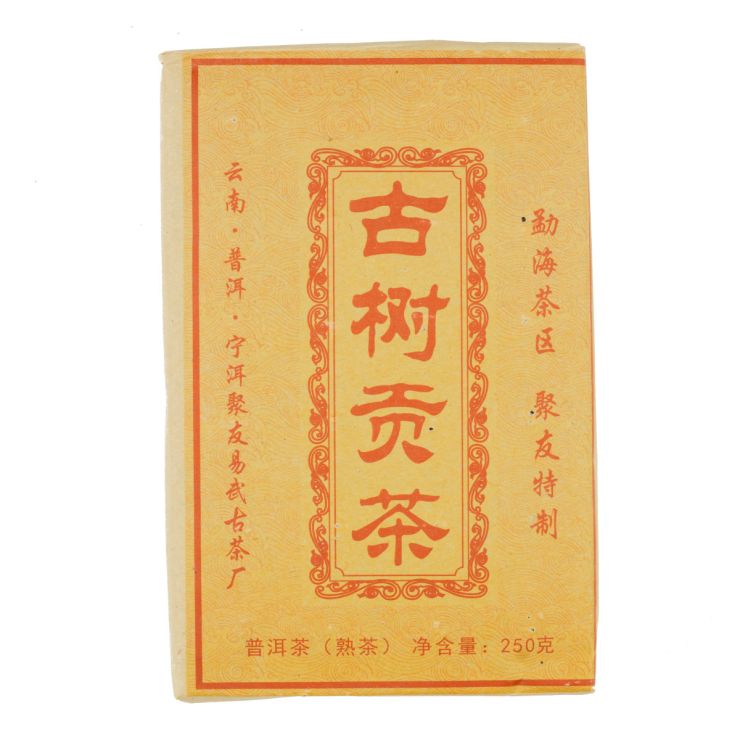
Ju You 1999 Gu Shu Gong Cha (Shu Pu'er)
This shu pu'er is produced from leaf material from 1999. The tea comes in the form of a 250g brick and the bricks themselves were pressed in 2016. So the tea has spent its life before pressing as loose leaf. The tea material is from the Menghai region. There is a reasonable variation in the size of the leaf material, giving the tea a rich taste. The nature of the tea is quite light, but with a stronger infusion it gives an excellent deep and characteristic taste. We think this is an excellent opportunity to taste a slightly older tea at a reasonable price!
Details
General
Shu pu'er is the second main type of pu'er tea, alongside naturally aged sheng pu'er. The Shu pu'er production process was invented in the 1970s to create a tea that could mimic the taste of naturally aged sheng pu'er in a shorter fermentation time. Before the leaves are pressed into cakes, they are spread out on the factory floor in large piles, which are watered and covered with cloths. This piling stage accelerates biochemical and microbiological changes in the leaves, effectively composting them. The piling stage can last from several weeks to months. Shu pu'er is available in many different forms, as pressed cakes and also loose leaf.
Ju You is a small pu'er producer whose tea selection mainly covers tea varieties from the Yiwu tea production area. In the late 20th century, the factory operated as a local productor for the state-owned pu'er tea producing company CNNP, which mainly processed tea from the Yiwu area. Now the company operates as a private company. The producer is one of our favorites, as all the cakes pressed by the producer show exceptionally high quality workmanship. The leaf material is largely intact and the traditional stone-pressed cake pressing is done with just the right amount of force so that the tea is easy to separate from the cake without using too much force. In addition, the producer is very good at sourcing tea leaf material. Tea grown elsewhere than Yiwu is also of high quality. The producer's long experience and contacts are behind all this.
This tea
This shu pu'er is produced from leaf material from 1999. The tea comes in the form of 250g bricks. The bricks themselves were pressed in 2016. The tea has therefore spent its life as loose leaves before pressing. The tea material is from the Menghai region. According to the producer, the leaf material comes from old tea trees. The name Gu Shu Gong Cha means Tribute Tea of Old Trees. We are a little skeptical about this, as the leaf size is slightly smaller and the taste does not resemble tea from old trees. Producers use the term Gu Shu quite freely in the names of tea varieties. The tea is probably grown in normal tea gardens or some kind of transitional cultivation, which is also quite common. We have tested this tea in the laboratory to measure pesticide residues and it is still pure tea! The leaf material has a reasonable variation in size, giving the tea a rich flavor. The nature of the tea is quite light, but when infused more strongly, it gives it an excellent deep and characteristic flavor. We think this is an excellent opportunity to taste a slightly older tea at a reasonable price!
You may see light fibrous material on the surface of the brick. This is paper fiber that has come off the wrapping paper.
Taste
Coming soon...
Infusion
Detach the leaves from the pressed tea with a sharp tool for steeping. You can use a dinner knife, for example. A spike-like shape works best, as it breaks the leaves less. Boiled water is used to infuse Pu'er tea. About 4-6 grams of leaves are needed, or a generous tablespoon of loose tea. The tea leaves are rinsed first. Hot water is poured over the tea leaves and allowed to steep for about 10 seconds. This rinsing water is poured off. The rinsing helps to clear the tea and reduces the stronger fermentation taste and smell on the surface of the leaves. Tea can be infused using the so-called gongfu technique, using a teapot of less than 300ml and steeping the leaves several times. In this case, the length of the steeping should be about 30-60 seconds. The number of leaves can also be increased, in which case the steeping time can be reduced to 10-20 seconds. If you are using a larger teapot or only want to make one brew, the steeping time should be 3-5 minutes. Adjust the amount of leaves to achieve the desired strength.
- Country of manufacture: China
- Ingredients: Tea
- Importer: Teepolku Oy
- Business registration number: 2484659-6
- Store in a dry place and at room temperature